Plumbing fleet

Build the van around the five tools your tech pulls first.

Frequent access, long-part storage, dirty material, ladders, parking and the Friday emergency call should decide the vehicle and the upfit. I start there, then work back to the exact van and the dealer's written proposal.

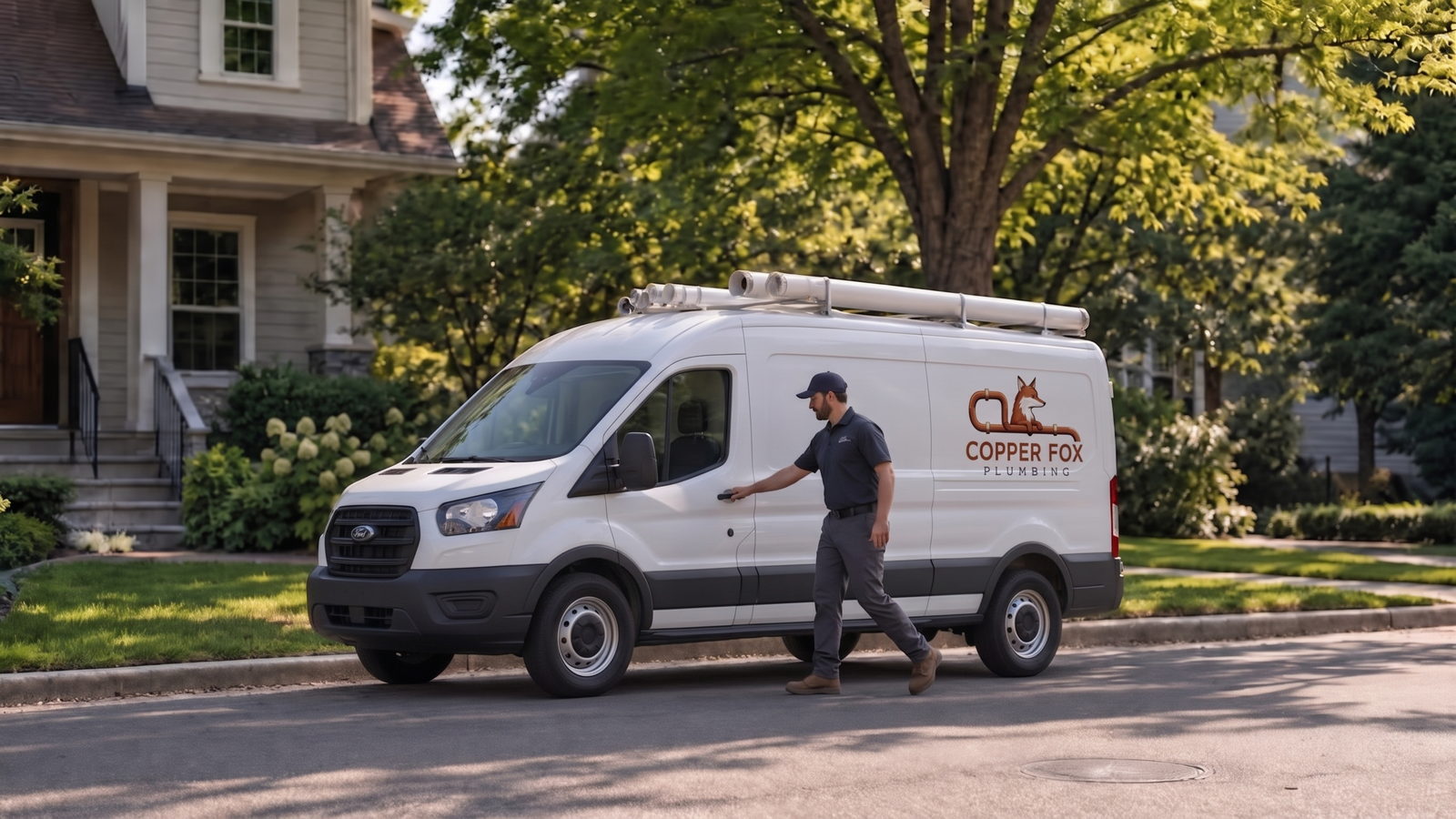
Technician walking to a wrapped plumbing service van outside a customer home

The next crew cannot earn from an empty parking space.

A plumbing van is a rolling parts room that has to open a hundred times a day. When I plan one with you, I am not asking which van you like. I am asking what your tech reaches for on a water heater swap, a slab leak, a drain call and a repipe, and how many of those happen in a normal week.

From that list we decide the roof, the length, the door layout and the shelving. Then I find the vehicle, compare the real written transaction, coordinate the upfit and the wrap, and ship the finished van to your shop. You keep running the business. I keep the vehicle project moving.

  • Long-part and pipe storage that does not block the side door
  • Wet, dirty and clean-zone separation so fittings stay clean
  • Door choice and curb-side access for tight residential streets
  • Ladder handling and roof-rack reach for one-person loading
  • High-frequency tool placement within one step of the door
What a plumbing tech carries

Weight adds up faster than most owners expect.

Press tools and jaws, a drain machine, a jetter or a sectional cable, a cart of fittings in several materials, a water heater or two on install days, a ladder, a wet vac, and the pipe on the rack. On a fully stocked service van that load routinely runs past 1,500 pounds before the tech gets in. That is why I put payload after upfit at the top of the list, not the badge on the grille.

Roof height is the second decision. A high roof lets a tech stand up and work inside, which matters on long install days. A standard roof fits more garages and parking structures. Your route decides, and I will tell you when the cheaper answer is the right one.

Common vehicle picks

Where plumbers usually start

  • Ford Transit — high roof for stand-up interior work, three lengths, AWD available for winter routes.
  • Ram ProMaster — low load floor and wide interior make every stop faster on dense service routes.
  • Mercedes-Benz Sprinter — big cargo volume and payload for repipe and commercial crews.
  • Ford Super Duty — a service body on an F-350 for underground, excavation and water-service work.
Upfit patterns that work

Layouts that earn their cost

  • Drawer units for fittings by material, labelled by the tech who uses them
  • Pipe tubes on the roof rack or under the shelving, loaded from the rear
  • A bulkhead partition so cargo stays behind the driver in a hard stop
  • Bin walls near the side door for the daily-use kit
  • A drip tray or sealed floor zone for drain equipment and wet material
Decide before the quote

Settle these first

  • Roof height against your garages and parking
  • Payload after shelving, stock and tools
  • Side door or dual side doors
  • Where the ladder rides and who loads it
  • Trade-in, financing options and delivery date
Straight answers

Questions plumbing owners ask me

What is the best van for a plumbing business?

For most residential service routes it is a high-roof Ford Transit or a Ram ProMaster with a bulkhead and drawer shelving. Repipe and commercial crews often want a Sprinter for cargo volume, and underground crews want a Super Duty with a service body. I compare the exact configuration against your route before recommending one.

How much does a plumbing van cost all-in?

The base vehicles on this site start between $46,000 and $55,000. A crew-ready plumbing van adds shelving, a partition, a ladder rack, a wrap, destination and fees, and often lands well above the base number. I put the dealer's and upfitter's written pricing for the exact build in front of you before you commit.

Can the van and the upfit be financed together?

I introduce you to lenders and lessors who can cover the vehicle and the build so you are not paying for shelving out of cash flow. The final decision on any credit product stays with you and your lender.

How long does it take to get a plumbing van on the road?

Depending on vehicle availability and the upfit, most builds go from first call to delivery in a few weeks to a couple of months. I keep every milestone visible so you know the date before you hire the tech.

Plan the plumbing van your next tech can use on day one.

Start the build plan