HVAC fleet

When the Friday call comes, the right part needs to be on the van.

Refrigerant, recovery equipment, ladders, parts, payload, heat and route reality shape an HVAC build. I plan the van around the service call you cannot afford to miss.

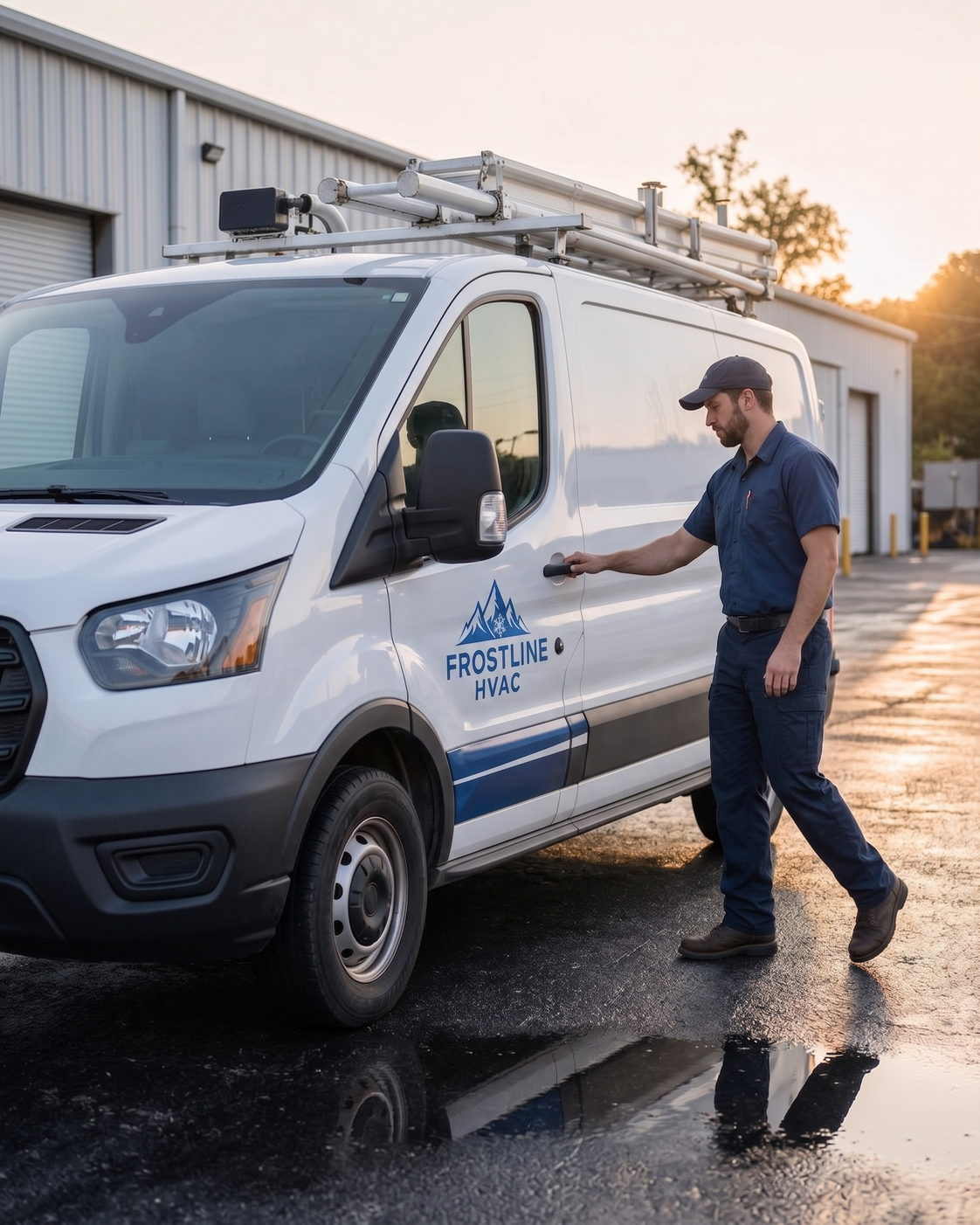
Technician opening the door of a wrapped HVAC service van outside a shop

The vehicle is the technician’s mobile supply room.

An HVAC service van carries more weight and more awkward equipment than almost any other trade van. Refrigerant cylinders have to ride secured and upright. The recovery machine, vacuum pump and scale need a home the tech can reach without unloading anything else. Capacitors, contactors, motors and thermostats need bins the tech can see into. And the ladder has to come down without a second person.

I start with that equipment list, then the routes: rooftop units downtown, attic air handlers in the suburbs, or a mix. From there we choose roof height, length, drive and the shelving plan, and I take the vehicle, the deal, the upfit, the wrap and the delivery through one visible process.

  • Recovery equipment and cylinder plan with secured, ventilated storage
  • Roof-rack access and ladder handling for one-person loading
  • Fast-moving parts visibility so the tech is not digging at a customer’s house
  • Payload and upfit weight verified before the shelving is ordered
  • Downtime and service-path planning so a van in the shop does not idle a tech
Install crews and service techs are different builds

One van for service. A truck and trailer for installs.

Service techs live in a van with organized parts. Install crews move condensers, air handlers and line sets, and often a trailer. Trying to make one vehicle do both usually gives you a van that is too heavy on service days and too small on install days. I will tell you when your fleet plan needs two vehicle types, and when one high-roof van with a towing package covers it.

Heat matters too. A tech working out of a dark van in a summer market needs ventilation, and refrigerant storage needs it more. Cargo ventilation and reflective wraps are cheap decisions to make before the build and expensive afterward.

Common vehicle picks

Where HVAC companies usually start

  • Ford Transit — high roof, long body and strong payload options for a fully stocked service van.
  • Mercedes-Benz Sprinter — cargo volume and payload for techs who carry a deep parts inventory.
  • Ram ProMaster — low load floor for frequent stops on residential maintenance routes.
  • Ford Super Duty — crew cab with a service body or towing package for install crews.
Upfit patterns that work

Layouts that earn their cost

  • Cylinder rack near the rear doors with straps and ventilation
  • Shelf bay sized for the recovery machine, vacuum pump and scale
  • Clear-front bins for capacitors, contactors and thermostats
  • Drop-down ladder rack the tech can work alone
  • Partition with a window so the cab stays cool and secure
Decide before the quote

Settle these first

  • Service van, install truck, or both
  • Payload after refrigerant, tools and stock
  • Roof height against garages and rooftop access
  • Towing need for install trailers
  • Financing options, trade-in and delivery date
Straight answers

Questions HVAC owners ask me

What is the best van for an HVAC company?

For residential service, a high-roof Ford Transit or Mercedes-Benz Sprinter with a cylinder rack, drawer shelving and a drop-down ladder rack covers most routes. Install crews usually need a pickup or chassis cab with a service body and a trailer. I compare payload and cargo volume against your actual equipment before recommending one.

How much payload does an HVAC service van need?

A stocked HVAC service van often carries 1,500 to 2,500 pounds of equipment, parts and refrigerant before the technician. I verify the payload rating of the exact configuration after the shelving weight is known, not the brochure number for the empty van.

Can Glynn Fleet handle the wrap and the shelving together?

Yes. I coordinate the upfitter and the wrap shop inside the same plan so the graphics are designed around the actual doors, windows and roof rack, and the van arrives at your shop ready to work.

Do you work with new HVAC businesses?

Yes. I help startups plan a first van and introduce them to financing partners who work with newer businesses. Approval and terms are set by the lender. One well-planned van can set the standard for the next three.

Plan the HVAC van before the next crew starts.

Start the build plan