Good starting point for
Route-based service
- Plumbing and HVAC
- Electrical and field service
- Mobile workshop layouts
A flexible starting point for owners who need to balance cargo access, interior organization, route reality and technician comfort.
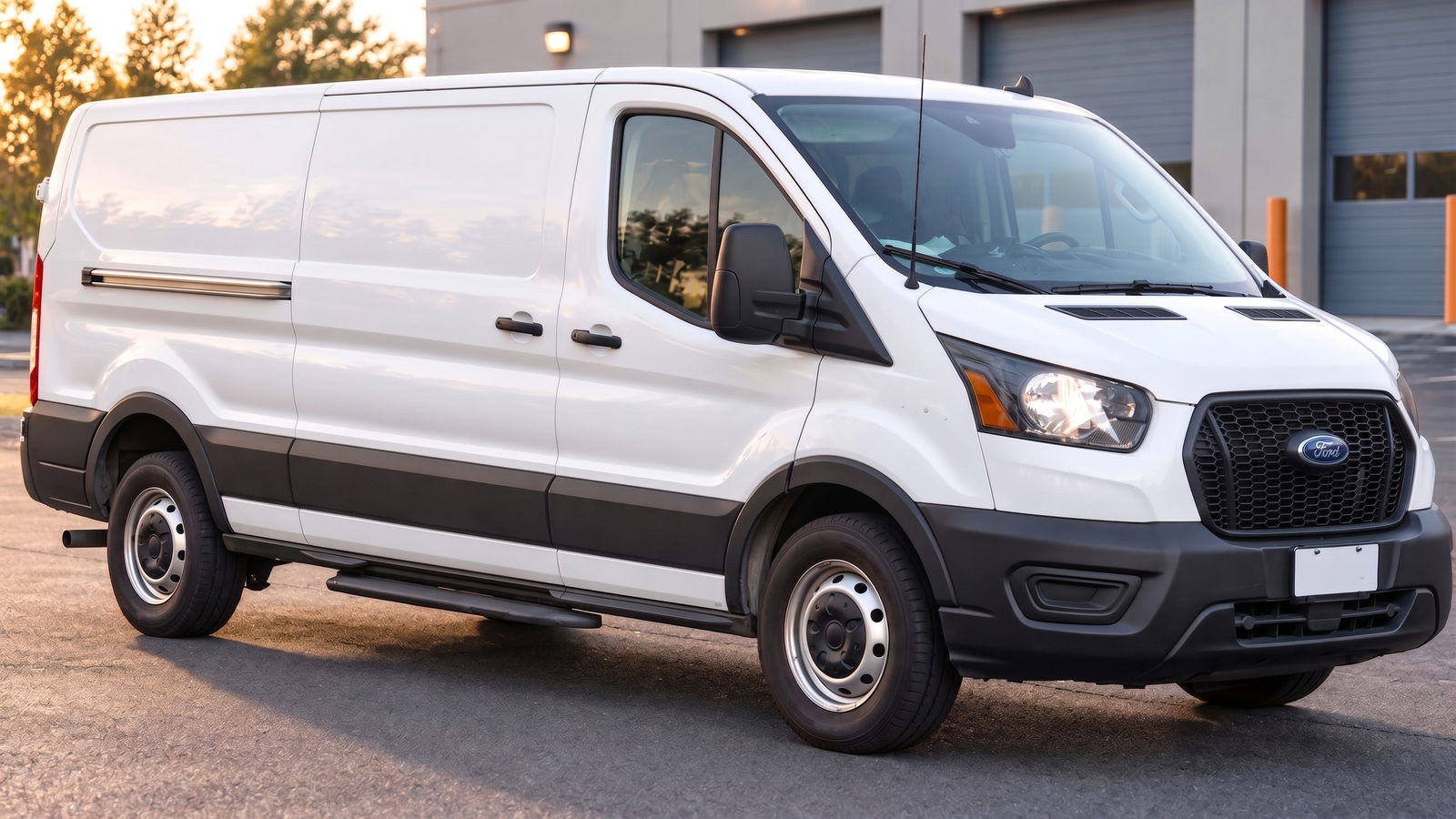
The Transit belongs on the shortlist when a service business needs flexible roof, length and powertrain choices. The right answer depends on the crew, the inventory and the route—not just the badge.
I compare the exact configuration and the written transaction, then coordinate the build around the work.
Before you sign for a Transit I check five things against your route: the roof and length combination that actually fits your garages and your longest part, the payload rating of that exact configuration after the shelving weight is added, whether AWD earns its cost on your winter routes, the door layout your tech will open a hundred times a day, and the written transaction including destination, fees and any dealer add-ons. Then I coordinate the upfit and the wrap so the van arrives at your shop ready for the first shift.
Ford builds the Transit in low, medium and high roof heights and three lengths, with rear-wheel or all-wheel drive. That range is why it shows up on so many trade shortlists, and also why two vans with the same badge can be very different tools. I will tell you which one your work is asking for.
The 2026 Ford Transit Cargo Van starts at about $49,000, rounded up from the manufacturer figure checked on ford.com on 2026-09-10. A crew-ready van adds shelving, a partition, a ladder rack, a wrap, destination and fees. Glynn Fleet lays out the dealer's written pricing for the exact configuration before you commit.
A low or medium roof fits more garages and parking structures. A high roof lets a technician stand up and work inside, which matters on long install days. Your route and your parking decide, and I will tell you when the cheaper roof is the right one.
Yes. The Transit is available with rear-wheel or all-wheel drive. AWD earns its cost on winter routes and unpaved sites; on flat urban routes it usually does not. I check that against where your crew actually drives.
Yes. I coordinate the shelving, partition, ladder rack, wrap and delivery inside the same plan as the vehicle purchase, so the Transit arrives at your shop ready for its first shift.