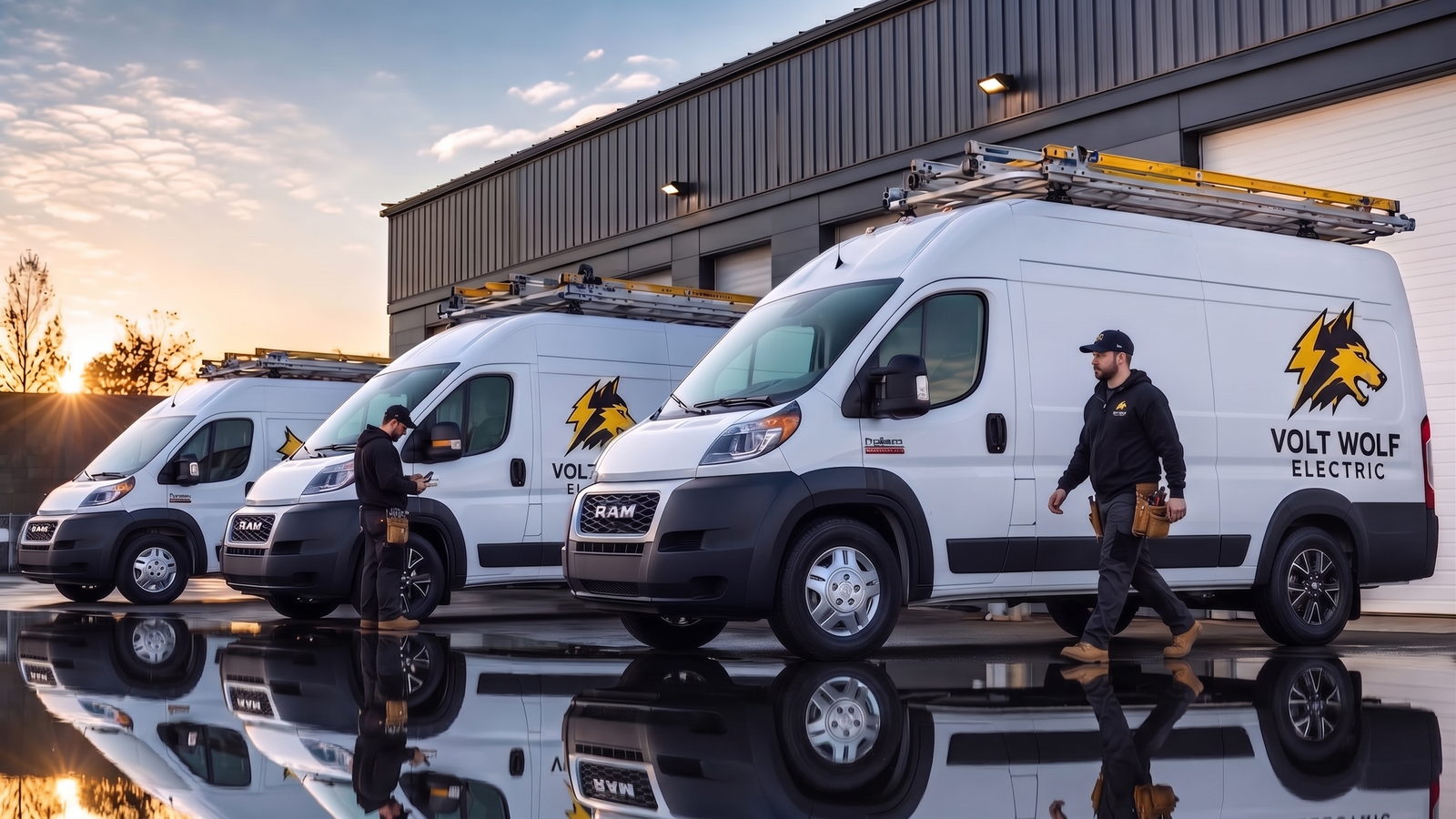
Electrical fleet

Make every reel, ladder and small part earn its place.

Security, cargo restraint, access and mobile inventory discipline matter more than empty cubic feet. I plan the van around how your electricians actually stock, load and lock it.

Three wrapped electrical service vans lined up outside a shop at sunrise

The truck should save steps on every stop.

An electrician’s van holds hundreds of small parts, several reels of wire, a bender, conduit, ladders and a tool bag worth more than most people’s first car. The build has to keep all of that visible, restrained and locked. It also has to survive a hard stop with a spool of wire behind the driver, which is why a bulkhead is not optional on the vans I plan.

I begin with the work: residential service, commercial rough-in, low-voltage, or a mix. Each one stocks the van differently. Then I carry the decision through the vehicle, the dealer's written proposal, the upfit, the wrap and delivery, and hand your tech a van that is organized on day one.

  • Reel and conduit placement that loads from the rear without unloading the bins
  • Small-parts visibility with labelled, tilt-out bins the tech can inventory in a glance
  • High-value tool security with a lockable cabinet and a partition
  • Cargo restraint and driver access that pass a hard-brake test
  • Parking, route and service needs for downtown commercial work
Residential service versus commercial rough-in

Two different vans wearing the same wrap.

A residential service electrician needs fast access to the fifty parts that solve most calls and a ladder that comes down alone. A commercial rough-in crew needs conduit length, reel capacity and room for a bender and a threader. The same model can serve both, but the length, roof and shelving plan diverge early. I will map both against your job mix so you do not buy the compromise van.

Low-voltage and data crews are a third build: lighter, more bins, more cable, and often a standard roof for parking-garage access. Franchise and multi-location electrical companies get a repeatable standard so the tenth van matches the first.

Common vehicle picks

Where electrical contractors usually start

  • Ram ProMaster — wide, square cargo area takes reel racks and bin walls efficiently.
  • Ford Transit — standard or high roof, three lengths, AWD available.
  • Mercedes-Benz Sprinter — cargo length for conduit and a polished fleet presence.
  • Ford Super Duty — service body with locking compartments for commercial and utility work.
Upfit patterns that work

Layouts that earn their cost

  • Reel rack with a cutting station at the rear doors
  • Bin walls with clear fronts, labelled by part family
  • Lockable tool cabinet behind a solid partition
  • Conduit tubes under the shelving or on the roof rack
  • Inverter or battery kit for chargers and job-site power
Decide before the quote

Settle these first

  • Job mix: service, rough-in, low-voltage or all three
  • Standard roof for garages or high roof for interior work
  • Partition and lock plan for tool security
  • Where reels and conduit ride
  • Financing options, trade-in and delivery date
Straight answers

Questions electrical owners ask me

What is the best van for an electrician?

For residential and light commercial service, a Ram ProMaster or Ford Transit with a bulkhead, bin walls and a reel rack covers most work. Commercial rough-in crews usually want the longest body available or a Sprinter. I compare the exact configuration against your job mix before recommending one.

How do I keep tools from being stolen out of the van?

A solid partition, a lockable cabinet for the high-value bag, no rear windows, and a wrap that does not advertise what is inside. I build those into the upfit plan rather than adding them after the first loss.

Can Glynn Fleet standardize vans across several crews?

Yes. I document one shelving layout, one wrap standard and one approved model list so every new van matches the last and any tech can find any part in any van.

How much does an electrical van cost all-in?

Base vehicles start between $46,000 and $55,000. Add a partition, bin walls, a reel rack, a ladder rack, a wrap, destination and fees, and the crew-ready number is well above the base. I put the dealer's and upfitter's written pricing for the exact build in front of you.

Plan the electrical van your tech will keep organized.

Start the build plan